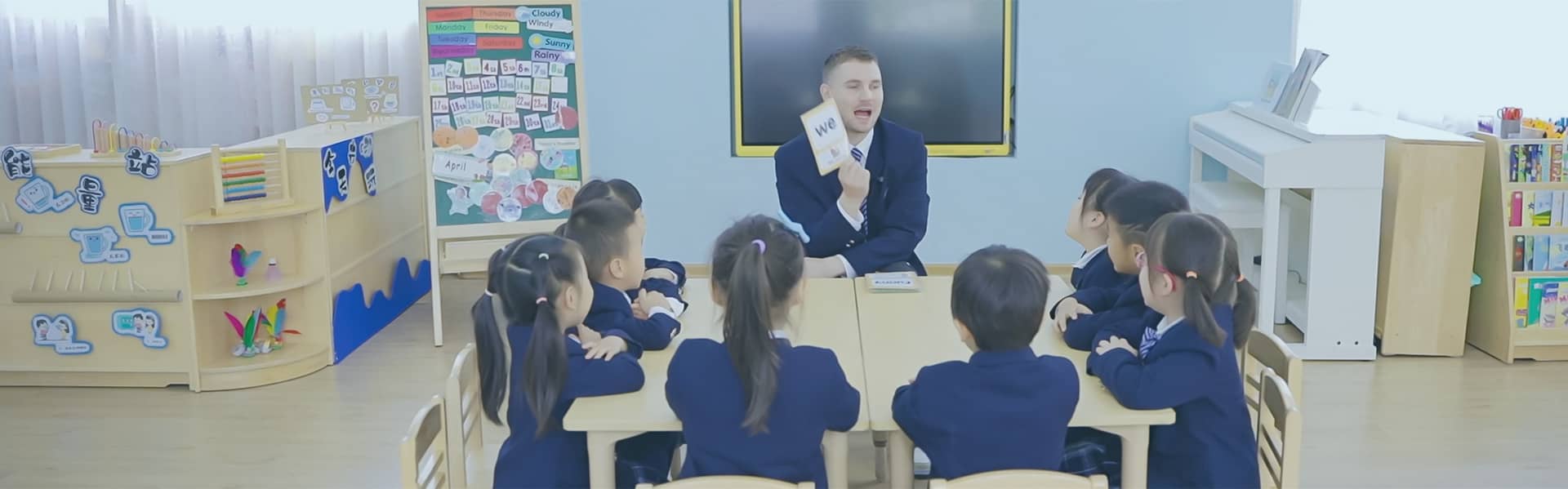
EYFS (Early Years Foundation Stage) is the British national standard for the learning, development, and care of preschool children, as well as the curriculum standard for all nurseries and kindergartens.
The UK Department for Education launched a special research project in 2000, which lasted 12 years and cost 150 million pounds. Over 7,000 experts, scholars, and teachers conducted in-depth research in more than 20 countries worldwide, confirming that early education can more effectively promote the development of preschool children and summarizing scientific approaches to early education. In 2008, EYFS was formally incorporated into England's Childcare Act 2006. Its scientific and authoritative educational framework has gained wide recognition globally and has become one of the world's most authoritative standards for early childhood education.
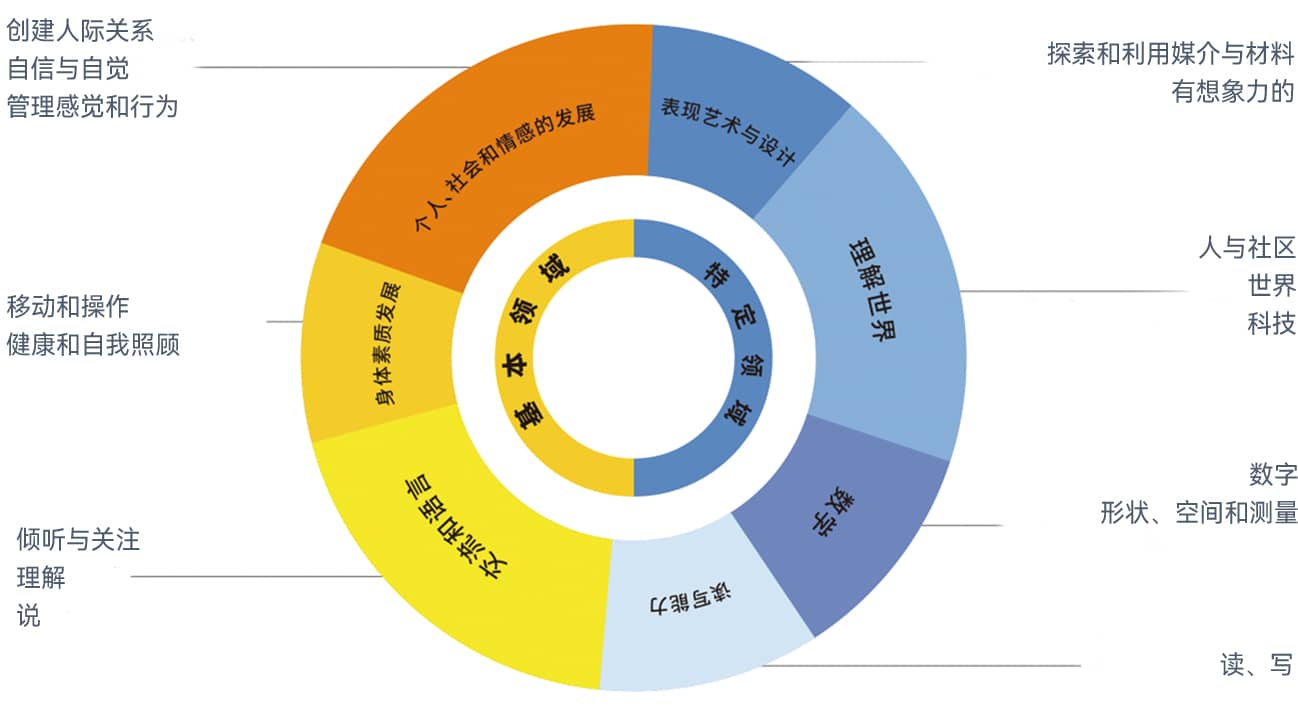
EYFS aims to provide preschool children with a continuous system of development and learning, enabling them to gain more and better opportunities for development in their daily lives. While preserving children's natural disposition, it gradually fosters the development of seven key areas of ability, helping every child grow into a physically and mentally healthy, secure, successful, and happy individual in the future.
On April 7, 2021, the signing ceremony for the Wenzhou integrated nursery-preschool pilot project was held. This was a concrete measure to implement the "Implementation Opinions of the General Office of Wenzhou Municipal People's Government on Accelerating the Development of Care Services for Children Under 3" and the spirit of the "Wenzhou People's Livelihood Practical Project for Care Service Institutions for Children Under 3" issued by the Wenzhou Municipal Health Commission, marking the official launch of the integrated nursery-preschool pilot program in Wenzhou.
Beixinji was designated as one of the first batch of integrated nursery-preschool pilot parks in Wenzhou and the first in Lucheng District. In line with the developmental goals for children of different age groups under the British EYFS framework, our school implements a consistent 0-6 year-old early education system:
Sprout Level
0-11 months
Parent-child program
EYFS Early Learning Center
Bud Level
8-20 months
Parent-child program
EYFS Early Learning Center
Baron Level
16-26 months
Half-day program
EYFS Nursery
Viscount Level
20-36 months
Full-day program
EYFS Nursery
Earl Level
3-4 years old
Full-day program
EYFS Kindergarten
Marquess Level
4-5 years old
Full-day program
EYFS Kindergarten
Duke Level
5-6 years old
Full-day program
EYFS Kindergarten
Personal, Social and Emotional Development
Children begin to enjoy the company of others and seek contact with them. They use sounds, gestures, eye contact, and facial expressions to engage with people, attract their attention, and find comfort in touch, faces, and voices.
Communication and Language
Children begin to turn toward familiar sounds and can accurately locate the source of sounds. They interact with others through smiling, watching, and moving their bodies. When they hear their own name, they pause to locate the source, and gradually develop language to communicate with adults, expressing their needs and feelings.
Physical Development
Children begin to respond to sounds and sights by turning their heads and gradually develop the ability to lift their heads. As they move their arms and legs, they gain better control over their own bodies and gradually become able to respond to warm, sensitive physical contact and care.
Literacy
Children begin to enjoy looking at books and other printed materials with familiar people. We can collect a range of board books, cloth books, and storybooks to share with them, and use finger games, rhymes, and familiar songs to support their enjoyment.
Mathematics
Children can notice changes in the number of objects, pictures, or sounds in groups of up to three, and integrate this with their play, exploration, and physical development.
Understanding the World
Children can move their eyes and heads to follow moving objects and look around the room with interest. We can provide everyday items, new experiences, and spaces for children to explore, encouraging their movements.
Personal, Social and Emotional Development
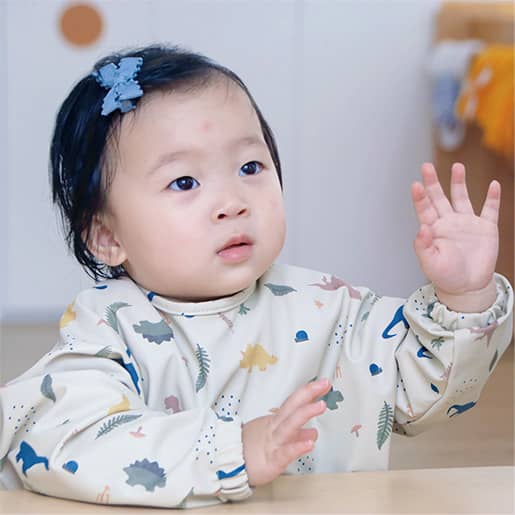
Children begin to seek various ways to gain attention and engage others in interaction. They use gaze to make requests and share interests, share emotions with familiar adults, and begin to understand the boundaries of "yes" and "no."
Communication and Language
Children can move their bodies in response to sounds they enjoy. They begin to have a strong urge to explore, gradually learn to follow others' body language, develop the ability to understand individual words in context, and in the early stages of language development, create their own words.
Physical Development
Children can sit on the floor without support, move around constantly by crawling, shuffling, or rolling, and take their first independent steps. They can pick up small objects using their thumb and other fingers, and begin to express their need to urinate or defecate.
Literacy
Children can hold books and printed materials with interest. When reading or telling stories, we can look at them and interact, drawing their attention to the pictures in the story.
Mathematics
Children begin to enjoy rhythmic songs related to number experiences and gradually show recognition of number names. They begin to demonstrate some understanding of the existence of objects and start to understand and enjoy daily routines.
Understanding the World
Children can closely observe the movements of animals, people, and vehicles, and they know that things can be used in different ways. We can provide them with lift-the-flap books, reveal hidden objects, and draw their attention to different areas of interest that stimulate their curiosity.
Personal, Social and Emotional Development
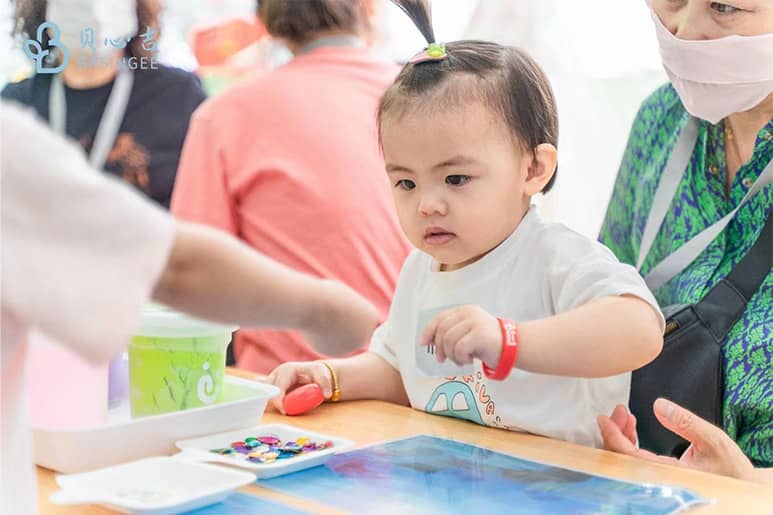
Children explore new toys and new environments and gradually engage in pretend play using toys. They show individual self-awareness and say "no" to adults when they want to do things independently. They become aware of others' feelings, showing concern when hearing crying or excitement when hearing familiar happy sounds. They sometimes feel angry and frustrated and may have tantrums. They begin to understand that some things are theirs, some things can be shared, and some things belong to others. They dare to play and interact with others and cooperate in games with a familiar adult.
Communication and Language
Children enjoy listening to rhythmic and rhyming poems and stories and try to join in with actions and sounds. They can select, find, and identify objects by name. They understand simple sentences, imitate familiar expressions, begin to ask simple questions, and start to talk about people and things that are not present.
Physical Development
Children hold an adult's hand when going up and down stairs, crawl backward to go down. They begin to balance blocks and build small towers with them. They have food preferences and are willing to try new flavors. They can hold a cup with both hands to drink without spilling much. They clearly communicate when their diaper or pants are wet or soiled. They know what a potty or toilet is used for and have some awareness of urination and defecation. They want adults to help them dress and undress and begin to develop awareness of hygiene routines.
Literacy
Children are interested in books and poems and have particular favorites. Their writing is early mark-making, which is different from writing—it is a sensory and physical experience for the child, and they have not yet connected it to forming symbols that convey meaning.
Mathematics
Children understand the existence of things, even those out of sight. They begin to sort and classify objects, for example, putting all soft toys together and separating building blocks from cars. They recite numbers randomly, try to fit shapes into corresponding slots on boards or do puzzles, use blocks to create simple structures and arrangements, enjoy filling and emptying containers, and make connections through a series of actions and daily routines. They begin to understand what might happen "in the moment."
Understanding the World
Children are curious about people and interested in stories about themselves and their families. They enjoy pictures and stories of themselves, their families, and others. They explore objects by shaking, hitting, looking, talking, pulling, turning, poking, touching, and tasting. They remember where objects are placed and match parts of objects, such as putting a lid on a teapot. They anticipate recurring sounds, sights, and actions. They are interested in toys with buttons, flaps, and simple mechanisms and begin to learn how to operate them.
Expressive Arts and Design
Children express themselves through body movements and sounds, moving their bodies in response to rhythmic sounds and music, and listening to or joining in with nursery rhymes or songs. They imitate and improvise actions they observe, such as clapping or waving. They pretend that one object represents another, especially when the objects share common features.
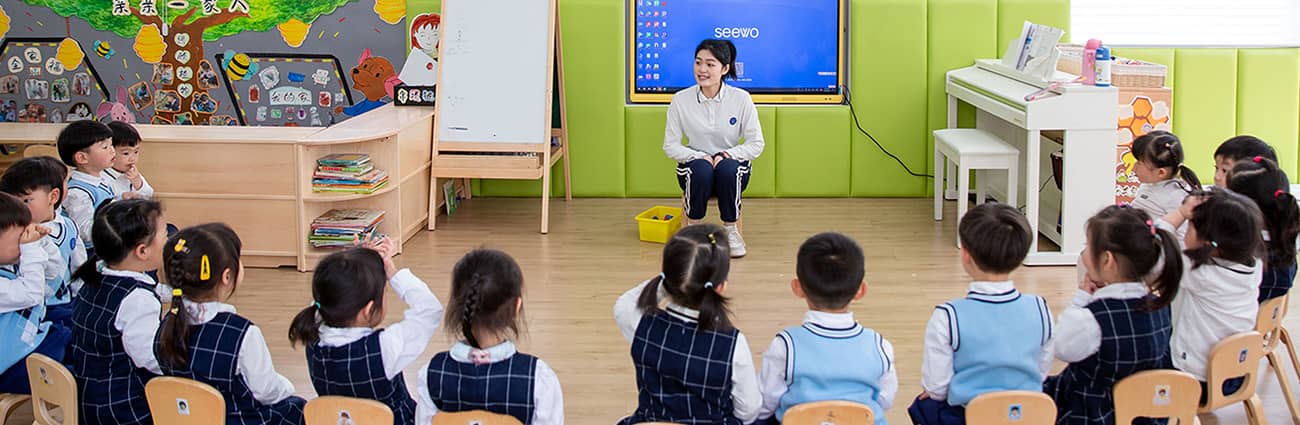
Personal, Social and Emotional Development
Children can separate from their primary caregivers with the support and encouragement of familiar adults. They are interested in others' play and begin to join in. They have special people they like and care about and seek others to share experiences with. They express their preferences and emotions, such as sadness, happiness, anger, fear, and worry. They sometimes seek comfort from familiar adults; they respond to others' feelings and wishes; they become aware that some actions may hurt others. They try to help or offer comfort when others are upset. Children show understanding of and cooperation with rules and routines; they can inhibit some of their own behaviors; their ability to shift attention improves.
Communication and Language
Children are interested in the sounds adults make when reading stories and recognize and respond to many familiar sounds. They are interested in music games, singing, and rhymes. Children can switch to a different task when their attention is fully engaged. They can correctly point to pictures, recognize action words, understand more complex sentences, and look at books. Their understanding of simple concepts continues to develop, and they use language as a powerful way to build relationships, share emotions, experiences, and ideas. They can maintain conversations with others and jump from one topic to another. They learn new vocabulary very quickly and use it in communication.
Physical Development
Children can run safely with both feet on the ground; they can squat smoothly to rest or play with objects on the ground and stand up without using their hands; they can climb confidently; they can kick a large ball, hold handrails, and go up and down stairs two feet per step; they can turn pages in a book, sometimes several at a time. They show control when using a jug to pour water, hammers, books, and marking tools. They drink without spilling and can feed themselves completely with a spoon. They begin to hold writing tools with three fingers (tripod grip), imitate drawing simple shapes such as circles and lines, and begin to show a preferred hand. They can clearly express their need for a potty or toilet, begin to recognize danger, and seek help from important adults. They begin to take care of themselves independently but still need adult support. They help arrange clothing, put on hats, unzip coats, and take off unbuttoned shirts.
Literacy
Children have some favorite stories, rhymes, songs, poems, or chants. They repeat familiar words and sentences from stories, fill in missing words or phrases in known rhymes, stories, or games, and distinguish between the different marks they make.
Mathematics
Children can select a smaller number of objects from a group and recite some numbers in order. They try to create symbols and marks to represent the concept of numbers. They begin to compare quantities and use quantitative words such as "more" and "lots." They understand that when something is added to or taken away from a group, the quantity changes. They notice simple shapes and patterns in pictures and begin to sort objects by characteristics such as shape or size. They begin to use language related to size. They understand some talk about the recent past and the future, such as "before," "after," and "soon." They anticipate specific time-based events such as "meal time" and "home time."
Understanding the World
Children begin to have their own friends. In pretend play, they imitate daily behaviors and events from their home or life, such as "making tea and drinking tea." They know that they have similarities and differences with others and can distinguish between them. They enjoy playing with small-world models, such as farms, garages, or train tracks, and manipulating mechanical toys, such as turning wind-up knobs or pulling back an inertia toy car.
Expressive Arts and Design
Children enjoy singing and dancing. They are interested in the sounds of musical instruments and make sounds by tapping and shaking, trying different ways to explore artistic media. They enjoy role-play games and, in imaginary scenarios, may speak softly, slowly, or in a rough voice for fun. They experiment with various forms of artistic expression by safely using different materials, forms, and functional media.
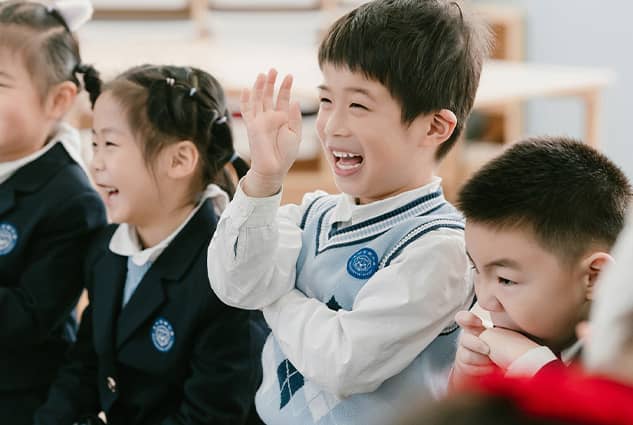
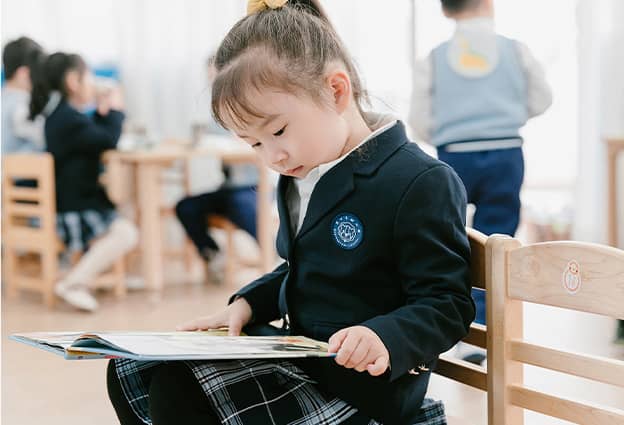
Personal, Social and Emotional Development
Children show interest in others' play and want to join in. They respond to others through actions or language during play and form special friendships with peers. Children can confidently try new games and activities and express why they prefer them. They express their emotions, such as happiness, anger, fear, and more. They seek comfort from adults when sad, become aware that some behaviors are unacceptable, and are able to understand and follow rules.
Communication and Language
While listening to stories, children are interested in the sounds adults make, recognize and respond to many familiar sounds, and show interest in music games, singing, and rhymes. Children can understand some simple questions in stories, such as "Who is that? Is that okay? What is that? Where?" Their understanding of simple concepts continues to develop, and they understand more complex sentences. Children can follow instructions about others' ideas or actions, begin to ask simple questions, and talk about people or things that are not present.
Physical Development
Through movement, children develop coordination, control, and motor skills. They can run safely, tend to use their hands to grasp, squat smoothly with both feet on the ground to rest, and stand up without needing hand support. When walking up and down stairs, they can hold the handrail and go two feet per step. They can hold tools or objects steadily with three fingers. In terms of healthy eating, children can eat with a spoon, begin to take care of themselves independently, and clearly express their needs to adults, such as arranging clothing or using the toilet.
Literacy
Children enjoy listening to stories and repeat favorite stories, rhymes, songs, poems, or phrases. They fill in missing words or phrases in familiar rhymes, stories, or games, for example, saying "I hold it" while holding a toy. They begin to ask questions such as "What? Where? Who?" Children make marks on items they like and can distinguish between the different marks they make.
Mathematics
Children are interested in mathematics and can recite some numbers in order. They use quantitative words such as "more" and "lots." When asked questions like "Please give me one, please give me two," children understand and complete the request. They know that the quantity changes when they take one or two items from a group. Children use everyday language to talk about time, including recent past and future events, such as "before," "after," and "soon." They anticipate specific time-based events such as "meal time" and "home time."
Understanding the World
Children begin to have their own friends. In pretend play, they imitate daily behaviors and events from their home or life, such as "making tea and drinking tea." They know that they have similarities and differences with others and can distinguish between them. They enjoy playing with small-world models, such as farms, garages, or train tracks, and manipulating mechanical toys, such as turning wind-up knobs or pulling back an inertia toy car.
Expressive Arts and Design
Children enjoy singing and dancing. They are interested in the sounds of musical instruments and make sounds by tapping and shaking, trying different ways to explore artistic media. They enjoy role-play games and, in imaginary scenarios, may speak softly, slowly, or in a rough voice for fun. They experiment with various forms of artistic expression by safely using different materials, forms, and functional media.
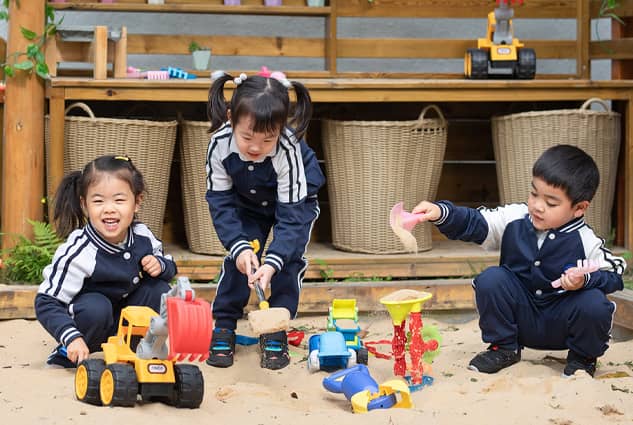
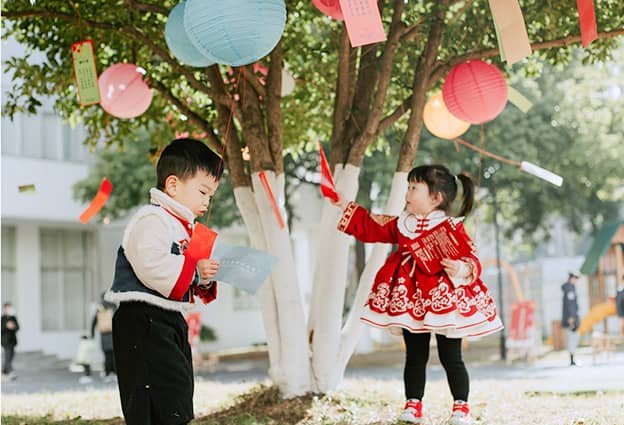
Personal, Social and Emotional Development
Children learn how to manage their emotions and control their expressions, and are given the power to express themselves. In social interactions, they show their attitudes through verbal and behavioral responses to others or events, actively invite peers to join, extend and elaborate on play ideas in group games, show friendly behaviors toward peers, and build good relationships. Children who experience emotions during interactions can face their feelings and self-regulate.
Communication and Language
We develop their confidence and ability to express themselves. Children listen attentively in different situations. They listen to stories, pay close attention to what others say, and can answer questions such as "What happened then?" and "Why?" During cooperative play, children become aware of their peers' needs. When talking about events that have happened or are about to happen, they can connect ideas and events, further developing their expressive and explanatory skills.
Physical Development
Physical development helps children understand the importance of physical activity, enabling them to identify safe spatial boundaries and move freely in multiple ways with joy and confidence. They can run skillfully, navigate around obstacles in space smoothly, and adjust speed or direction to avoid obstructions. Children can operate tools and equipment with one hand, such as using children's scissors to cut paper or holding a pencil with their thumb and two other fingers.
In terms of health, children can tell adults when they are hungry, tired, or want to rest or play. They can manage their own personal hygiene and basic needs, including dressing independently and using the toilet.
Literacy
Children can listen to stories and poems individually or in small groups. When listening to stories, they begin to understand story structure, describe main settings, events, and main characters, and suggest possible story endings. They can also read books independently, showing interest in rhyme and alliteration. Children are interested in illustrations, printed words in books, and environmental print, understanding that print carries meaning. When reading picture books, they can read from left to right or top to bottom.
Mathematics
The mathematics domain covers numeracy, shape, space, and measurement. Children spontaneously use numbers and number language, such as "one, two, three, lots, fewer, hundreds, how many, count." They are interested in numbers and realize that not just objects, but anything can be counted, including steps, claps, and jumps. Children can separate groups of three or four objects in different ways. Through playing with various shapes and arranging objects, they show interest in shape and space, using language such as "sphere, shape, box, in, on, inside, under, long, longer, longest, short, shorter, shortest, heavy, light, full, and empty," etc.
Understanding the World
Children are interested in the lives of familiar people and can talk about similarities and differences among family and friends. They can understand and describe special times or events for family members or friends, comment on and ask questions about various aspects of their familiar world, such as their living environment or the natural world, talk about things they have observed, and show care for living things and the environment. They know how to operate simple devices, such as technical toys with knobs or pulleys, or real objects like cameras or mobile phones.
Expressive Arts and Design
Children enjoy singing and dancing. They are interested in the sounds of musical instruments and make sounds by tapping and shaking, trying different ways to explore artistic media. They enjoy role-play games and, in imaginary scenarios, may speak softly, slowly, or in a rough voice for fun. Children enjoy participating in dances and circle games, sing some familiar songs, create movements in response to music, use actions to express feelings, sing independently, and make up simple movements. In expressive arts and design, children create materials using available resources; express their thoughts, ideas, and feelings through music, dance, and role-play; safely explore and learn about sound changes and how colors change using different materials, tools, and techniques; and experiment with various forms of artistic expression using different colors, designs, textures, forms, and functions.
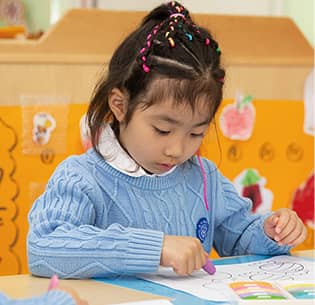
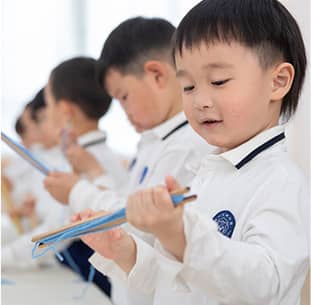
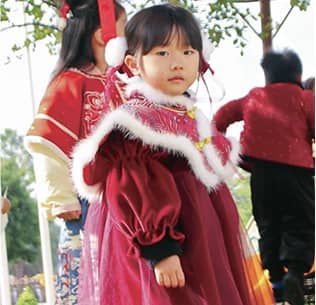

Personal, Social and Emotional Development
Children have the confidence to try new things and can talk about what they like or are good at. When encountering problems, they can resolve disagreements by listening to each other, can resourcefully seek help, and adopt a fair solution to deal with issues that arise. When discussing how to organize activities, children take into account others' suggestions, take turns participating, pay attention to others' needs and feelings, adopt everyone's opinions, and complete tasks without adult assistance.
Communication and Language
Children listen attentively in various situations. They listen to stories, accurately predict key events, and respond with relevant comments, questions, or action instructions. They use coherent language to express ideas or explain storylines to make them logical. While engaged in an activity, they can listen and act simultaneously, responding appropriately to instructions about ideas or actions.
Physical Development
Children demonstrate good control and coordination in both gross and fine motor skills. They can identify safe spatial boundaries and move confidently in various ways within them, effectively using equipment and tools. They use the correct pencil grip and can control the size of their writing. In terms of health, children understand the importance of maintaining physical health through exercise and a healthy diet, and can manage their personal hygiene and basic needs, including dressing independently and using the toilet.
Literacy
Children can read and understand simple sentences. They can use phonics to break down regular words and accurately read some common irregular words. They can understand what they have read and talk about it with others. When using phonics to write words that match their pronunciation, they also write some irregular common words.
Mathematics
Children can accurately identify numbers within a given range, say which number is one less or one more than a given number, and use quantities and corresponding objects. When adding or subtracting two single-digit numbers, they find answers by counting, and can solve problems involving doubling, halving, and sharing. Children use everyday language to talk about size, weight, capacity, position, distance, time, and money, and use them to compare quantities and objects and solve problems. They can identify, create, and describe various patterns. When exploring the characteristics of everyday objects and shapes, they use mathematical language to describe them.
Understanding the World
Children understand the difference between past and present events in their own lives, know some reasons why people lived differently in the past, and understand that different people have different beliefs, attitudes, customs, and traditions, as well as the importance of respecting one another. Children know when some everyday tools can be used; can name common plants, animals, including humans, understand their corresponding names and the changes of the four seasons; and are familiar with basic scientific concepts, such as experiments like floating and sinking. In daily life, children use a range of technological products to help them solve problems.
Expressive Arts and Design
Children use the media and materials they are familiar with, exploring to decide how to combine and change them, considering their uses and purposes. Children begin to understand the work of some artists, craftspeople, and designers, and can describe the differences and similarities between different art forms, relating them to their own work. They express their thoughts, ideas, and feelings through design and technology, art, music, dance, role-play, and storytelling.